

Dairy sector a key engine of agricultural economy
Milk output targeted at 43 Lakh MT by 2030: Javid Dar
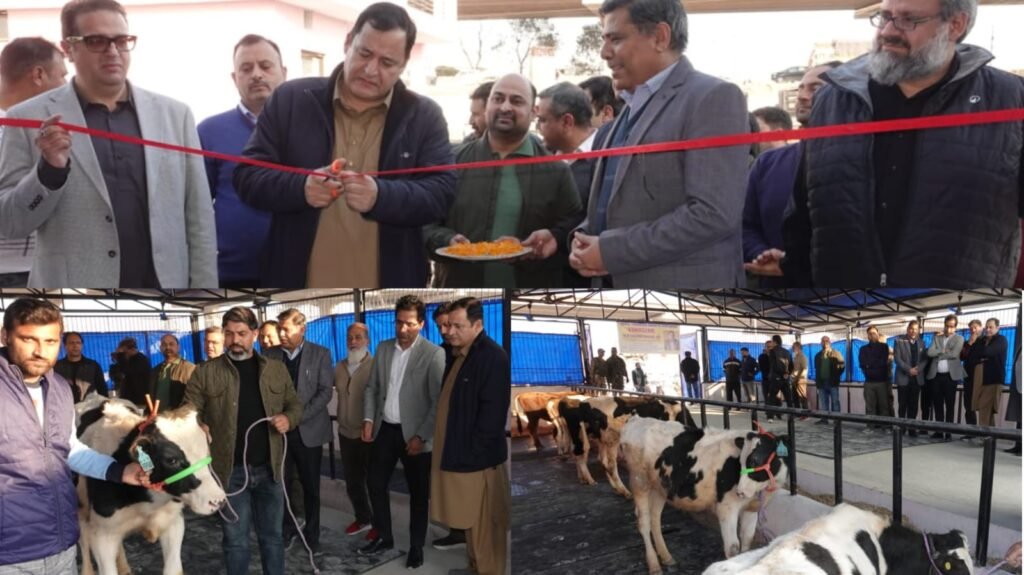
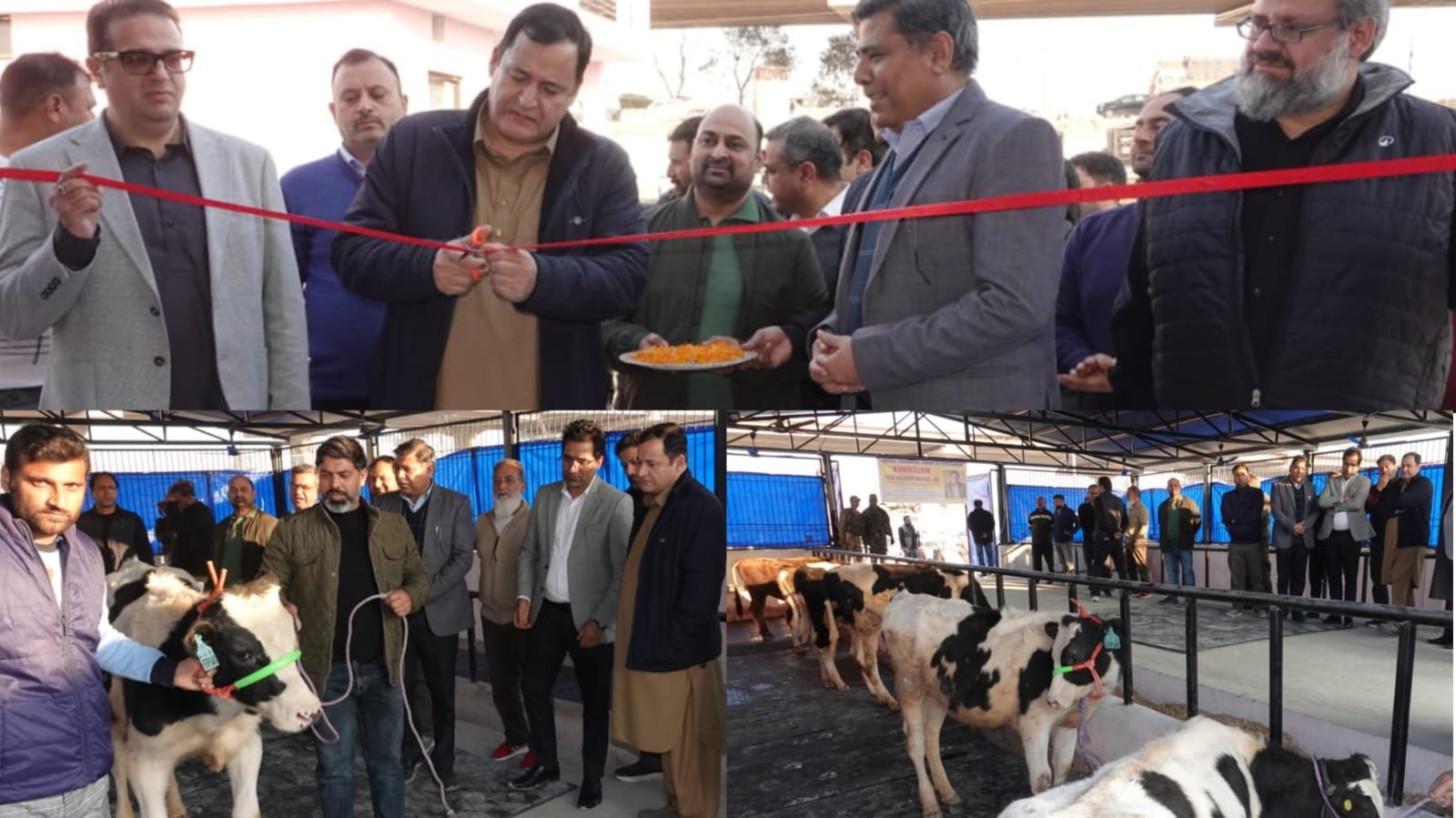
SAMBA FEBRUARY 6: “The dairy sector has emerged as one of the most dynamic pillars of the rural economy of Jammu and Kashmir, playing a transformative role in improving the socio-economic condition of small, marginal and landless farmers”, stated Minister for Agriculture Production, Rural Development and Panchayati Raj, Cooperative and Election Department, Javid Ahmad Dar, during his visit to the Animal Farm at Bari Brahmana, Samba, on Friday.
The Minister said that the J&K government has identified the dairy sector as a key growth engine of the agricultural economy and a cornerstone for strengthening rural livelihoods. Under the Dairy Development Project of the Holistic Agriculture Development Programme (HADP), the government has adopted a mission-mode approach to enhance the milk productivity and overall production, with the objective of ensuring higher farm incomes, improved profitability and sustainable livelihoods for dairy farmers.
He informed that Jammu and Kashmir currently produces around 30 lakh metric tonnes of milk annually and the government has set an ambitious target to increase this making to 43 lakh metric tonnes by 2030, thereby bridging the demand–supply gap and positioning the Union Territory as a net milk exporter.
Highlighting a historic milestone, the Minister announced that for the first time ever, the UT government has imported elite breeding bull calves from the United States of America to accelerate genetic upgradation of the bovine population through large-scale Artificial Insemination (AI).
“So far, 35 high genetic merit bull calves have been imported while five more are currently under quarantine in the USA. After completing mandatory quarantine at the Animal Quarantine Station, Bengaluru, 23 bull calves reached Jammu and Kashmir yesterday while the remaining 12 are in transit,” he said.
Out of the imported bull calves, 18 have been allotted to the Semen Station, Hakkal (Jammu) and 17 to the Semen Station, Ranbirbagh (Kashmir), significantly strengthening the semen production capacity across both the regions. These bull calves belong to the top one percent of global genetic merit, selected through rigorous scientific evaluation.
The Minister said that during their productive breeding life of about eight years, these elite bulls are expected to generate around 1.2 crore semen doses, leading to the birth of nearly 15 lakh high-yielding dairy cows across the Union Territory.
Describing the initiative as a game-changer, he said it will substantially boost the milk productivity, enhance farmer incomes, create large-scale employment in dairy farming and processing besides firmly placing Jammu and Kashmir on the path of becoming a net exporter of dairy products in the coming years.
He added that the Government of India is closely monitoring and appreciating the proactive efforts of the J&K government in making strategic investments in agriculture and allied sectors, reflecting a shared commitment to farmer welfare, rural prosperity and sustainable economic growth.
Among those present during the visit were Managing Director HADP Sandeep Kumar, Director Animal Husbandry Jammu Dr. Sanjay Gupta, Chief Animal Husbandry Officer Samba and other senior officials of the department.