


POSHAN Abhiyaan (Prime Minister’s Overarching Scheme for Holistic Nourishment) is a flagship, multi-ministerial mission to place nutrition at the centre of India’s national development agenda. The mission marked a shift in India’s approach from treating nutrition primarily as a welfare concern, to recognising it as a national priority linked to human capital development, the Sustainable Development Goals (SDG) and long-term growth. Over the past eight years, POSHAN Abhiyaan has transformed India’s nutrition governance architecture – embedding convergence, digital monitoring and community mobilisation into the framework.
Crucially, POSHAN Abhiyaan was designed around a lifecycle and preventive approach — rather than solely addressing acute malnutrition after it occurs. The mission places special emphasis on the first 1,000 days — from conception to two years of age — as this period is critical for physical growth, brain development and long-term health outcomes.
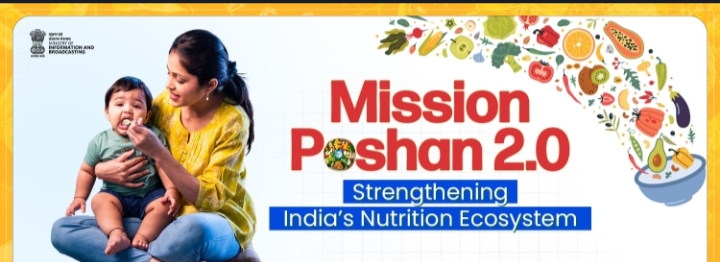
For several decades, nutrition interventions in India were implemented through multiple schemes, targeting different groups, across different ministries. While these addressed different aspects of nutrition, the approach remained largely sector specific. Over time, the need for convergence and coordinated implementation was recognised. The Union Budget 2021–22 further consolidated India’s fragmented nutrition initiatives under Mission Poshan 2.0 (Mission Saksham Anganwadi and Poshan 2.0), creating a unified and integrated framework. This restructuring subsumed the Anganwadi Services scheme, Scheme for Adolescent Girls and POSHAN Abhiyaan scheme.
